
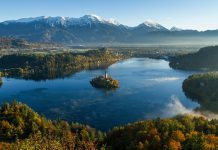












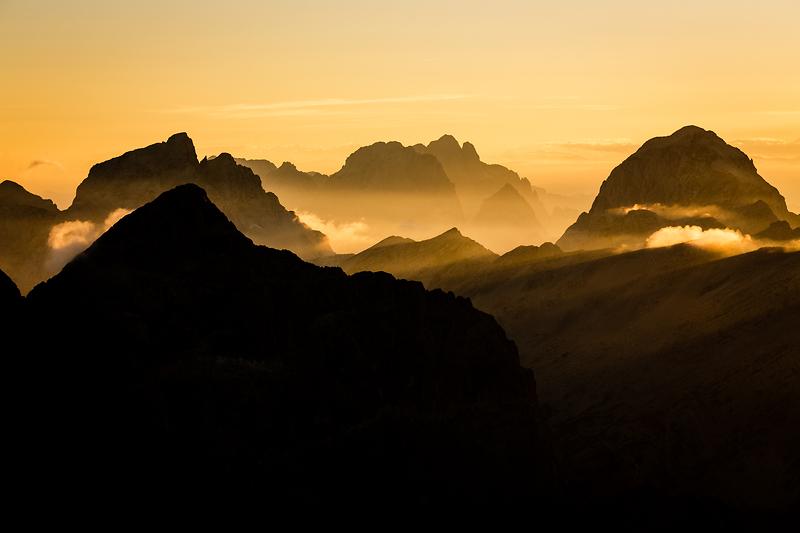

Discover why Slovenia is one of the safest and most rewarding travel destinations in Europe. Ranked consistently among the Top 10 safest countries in the world, Slovenia offers travelers peace of mind with its exceptionally low crime rates, clean and walkable cities, and reliable emergency services. From the vibrant streets of Ljubljana’s Old Town to the serene peaks of Triglav National Park and the sun-kissed vineyards of the Karst, every corner of Slovenia promises a stress-free and unforgettable adventure. With well-marked hiking trails, seamless public transport, and friendly English-speaking locals, Slovenia is the perfect destination for travelers seeking safety, authenticity, and natural beauty. Start planning your trip today and experience Europe’s hidden gem—safe, welcoming, and breathtakingly beautiful.
The Institute for Economics and Peace has released its Global Peace Index for 2025, an annual ranking of the world’s safest countries. To assemble the list, the Institute for Economics and Peace, with help from the Economist Intelligence Unit, ranks 163 nations on “a country’s level of Negative Peace using three domains of peacefulness.”


Slovenia the safest countries in the world
On the list of top 10 safest countries in the world, Slovenia ranked #9 in 2025.
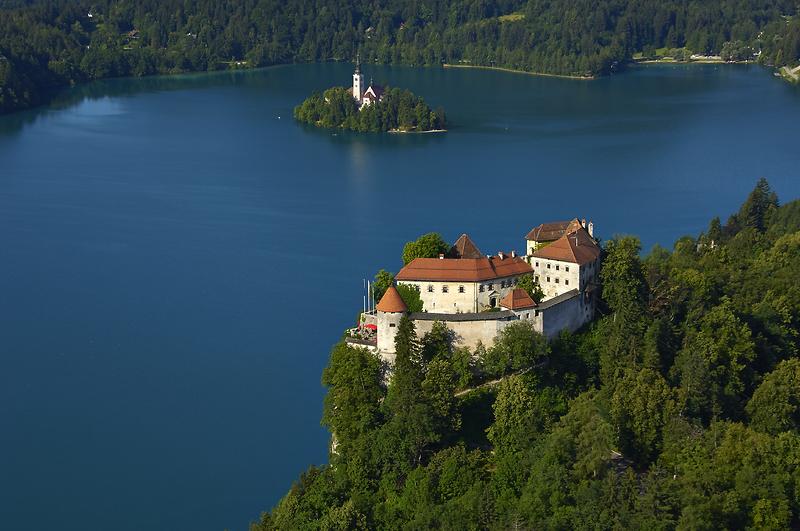
Slovenia is in the top 10 this year with a score of 1.409, thanks to an extremely low crime rate and low terrorism risk. Whether you’re just generally into beautiful places or want to explore some of Europe’s best castles and lakes, Slovenia has something for you—and now you know you can sleep easy there at night.”
Conde Nast Traveler wrote about Slovenia on the list of top 10 safest countries in the world: “Slovenia broke into the top 10 for the first time in 2020 and managed to stay there since, thanks to extremely low crime rates and terrorism risk. The country with beautiful places, some of Europe’s best castles and lakes, Slovenia has plenty to offer—including the guarantee that you’ll sleep well at night.
The Global Peace Index 2025 reveals that the world is at a crossroads. Without concerted effort, there is a risk of a surge in major conflicts. There are currently 56 conflicts, the most since World War II. They have become more international with 92 countries involved in conflicts outside their borders, the most since the GPI’s inception. The rising number of minor conflicts increases the likelihood of more major conflicts in the future. For example, in 2019, Ethiopia, Ukraine, and Gaza were all identified as minor conflicts.


Slovenia is also known as one of the cleanest countries in the world. Not to mention it is also one of the greenest destinations in the world with its many forests spread across the country. Nearly 60 percent of Slovenia is covered in lush forests, and more than 40 parks and reserves are home to some 20,000 different plants and animals, with a network of diverse hiking trails.
The Top 10 Safest Countries in the World in 2025
On the list of top 10 Safest countries in the world, The Institute for Economics and Peace placed the following countries:
- Iceland
- Ireland
- Austria
- New Zeland
- Singapore
- Scutzerland
- Portugal
- Denmark
- Slovenia
- Malaysia

Six out of the ten safest countries in the world are located in Europe. This summer chose to spend your holidays in one of the safest countries in the world, Slovenia.
Key results
• 97 countries deteriorated in peacefulness, more than any year since the inception of the Global Peace Index in 2008.
• Conflicts in Gaza and Ukraine were the primary drivers of the global fall in peacefulness, as battle deaths reached 162,000 in 2023.
• 92 countries are currently involved in conflicts beyond their borders, more than at any time since the inception of the GPI.
• First of its kind military scoring system suggests that US military capabilities are up to three times higher than China.
• The global economic impact of violence increased to $19.1 trillion in 2023, representing 13.5% of global GDP. Exposure to conflict poses a significant supply chain risk for governments and businesses.
• Militarisation recorded its largest yearly deterioration since the inception of the GPI, with 108 countries becoming more militarised.
• 110 million people are either refugees or internally displaced due to violent conflict, with 16 countries now hosting more than half a million refugees.
• North America saw the largest regional deterioration, driven by increases in violent crime and fear of violence.
Last year recorded 162,000 conflict related deaths. This was the second highest toll in the past 30 years, with the conflicts in Ukraine and Gaza accounting for nearly three-quarters of deaths. Ukraine represented more than half, recording 83,000 conflict deaths, with estimates of at least 33,000 for Palestine up to April 2024. In the first four months of 2024, conflict related deaths globally amounted to 47,000. If the same rate continues for the rest of this year, it would be the highest number of conflict deaths since the Rwandan genocide in 1994.


Why Slovenia Made the Top 10
The ranking reflects exceptionally low crime rates, minimal terrorism risk, and strong institutional stability. Analysts at the Institute for Economics & Peace and the Economist Intelligence Unit assessed 163 countries and found Slovenia performing strongly across “negative peace” indicators.
What It Means for Travellers
Whether you’re strolling through Ljubljana’s charming old town, hiking the pristine trails of Triglav National Park, or uncovering wine cellars in the Karst region, peace of mind is a ticket included. Cosy cafés stay open late, public transport works reliably, and locals are welcoming — the kind of environment that lets you relax, snap that perfect photo, and focus on your journey.
How You Can Experience It
- Walk the lit streets at night in Ljubljana → worry-free.
- Use trains and buses across regions → efficient and safe.
- Choose outdoor adventures → fewer risks, more freedom.
Slovenia continues to prove itself as a destination where you don’t just visit — you unwind.
Is it safe to walk at night in Ljubljana?
Yes. Ljubljana is considered one of the safest capitals in Europe. Violent crime is extremely rare, and both locals and tourists regularly walk around the city center at night without issues. As always, basic common sense is recommended, but overall the city is very safe.

Are Slovenians friendly to tourists?
Yes. Slovenians are generally warm, polite, and helpful toward tourists. They may appear reserved at first, but they are quick to assist when asked. In tourist areas (Ljubljana, Bled, Piran, Postojna) people are very accustomed to international visitors.
Is Slovenia a rich or poor country?
Slovenia is considered a high-income, developed country. Its GDP per capita is among the highest in Central and Eastern Europe, and the standard of living is comparable to many Western European countries. It is not a poor country, though it is smaller and less wealthy than major EU economies.
Can you speak English in Slovenia?
Absolutely. English is widely spoken, especially among young people, those working in tourism, hospitality, and in major cities. Most signs in tourist areas are bilingual, and visitors rarely face language barriers.