














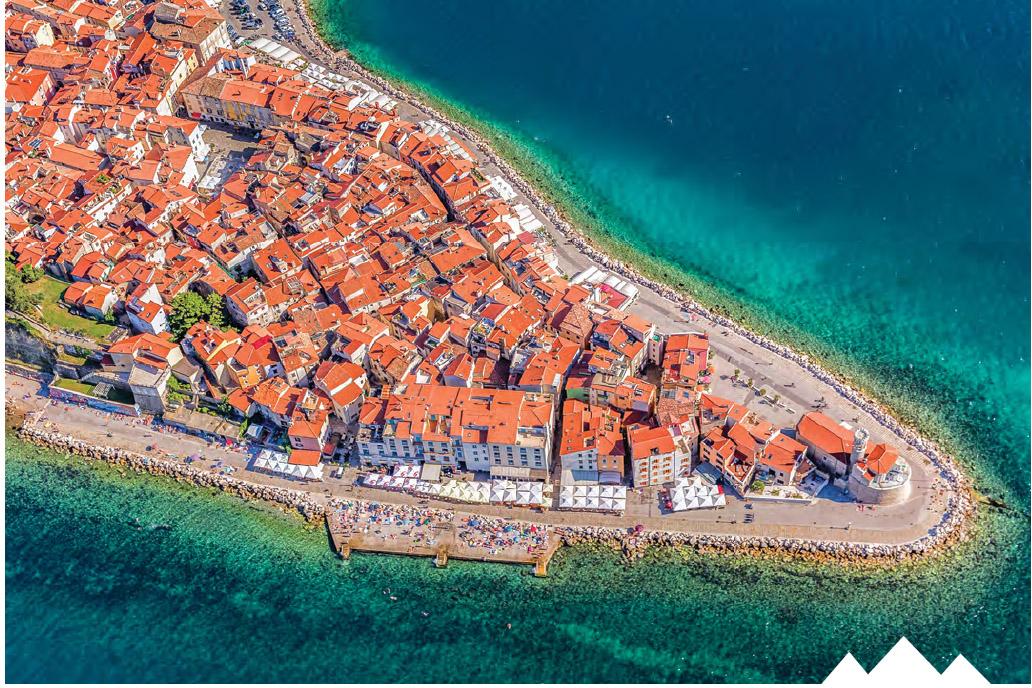

Piran is one of the most beautiful towns on the Slovenian coast, known for its Venetian architecture, narrow medieval streets and spectacular Adriatic views. The compact historic centre is best explored on foot, and most of its main attractions can be visited in one day.
Slovenia’s prettiest town
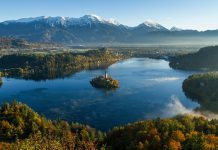
Piran is to Adriatic what Bled is to the Alps and Slovenia as a whole is to Central Europe: tiny, friendly, overwhelmingly picturesque. It’s a town that is almost impossible not to fall in love with on your first visit, and if you only have time for a day trip you’ll likely want to make plans to return. Despite its modest size, Piran is awash in superlatives. It boasts what is undeniably the country’s finest square, the 19th-century Tartinijev Trg named after the composer Giuseppe Tartini, and what has to be one of the most dramatically situated churches anywhere in Europe, St George Cathedral and its spectacular bell tower perched on the hill overlooking the town and the sea.
In addition, its numerous restaurants not only turn out some of the best seafood we’ve ever eaten, but also serve it in some equally unforgettable settings. Metre for metre this petite Venetian port can hold its own against anyone, including the imperial capital just over the horizon that was responsible for much of its fortune through the salt trade. In fact, it’s commonly said that the town was built on salt.
Piran does have the same kind of open-air museum feel to it as Venice, only on a much much smaller scale. However, once you venture from the heavily trafficked waterfront and central square down the narrow back streets, past the crumbling façades of ancient villas, freshly-laundered clothes hanging from windows overhead and the odd overgrown gardens let you know that Piran should not be mistaken for some manufactured cultural Disneyland – the charms are real and, yes, people do actually live here.


Best Things to Do in Piran
Walk along the Walls of Piran
The medieval Walls of Piran offer one of the finest views on the Slovenian coast. From the towers, visitors can admire the terracotta rooftops of the old town, Tartini Square and the blue Adriatic Sea. Visit in the morning or shortly before sunset for the best light and fewer crowds.
Walk to Punta and the Piran Lighthouse
Continue along the waterfront to Punta, the very tip of the Piran peninsula. The area around the lighthouse and the Church of St Clement is one of the best places in town for watching the sunset.
Visit the Maritime Museum
Located in the elegant Gabrielli Palace, the Sergej Mašera Maritime Museum explores Slovenia’s maritime history, traditional fishing, navigation and the development of the Adriatic coast.
Swim in the Adriatic Sea
Piran does not have a large sandy beach, but visitors can swim from the concrete platforms and stone steps along the waterfront. Popular swimming areas can be found near Punta and on the path towards Fiesa.

Visit the Sečovlje Salt Pans
The salt pans near Piran preserve centuries-old salt-making traditions and explain why Piran became known as the town built on salt. Visitors can explore the landscape park, learn about traditional production and purchase locally harvested Piran salt. Official information
How to Spend One Day in Piran
Start your day on Tartini Square before walking through the narrow streets to St George’s Parish Church. Continue uphill to the Walls of Piran for panoramic views over the town and the Adriatic Sea.
Return through First of May Square and stop for a seafood lunch near the waterfront. In the afternoon, visit the Maritime Museum or walk along the coastal path to Fiesa Beach. Finish your visit at Punta, where you can watch the sunset beside the Piran Lighthouse.
1ST OF MAY SQUARE (PRVOMAJSKI TRG)
The administrative centre of Piran until the 13th century, these days the square stands in stark contrast to the glistening Tartinijev Trg only a couple hundred metres away. It is scruffy and unkempt with the odd clump of grass poking up between stones and more than one façade unintentionally revealing brick walls beneath crumbling layers of paint. It is, in other words, perfect. In addition to several restaurants, art galleries and a great little wine bar, a large stone cistern elevates nearly half the square a metre off the ground and serves as a stage for various music, dance and theatre performances during the summer. Flanking the stairs leading up to the now dormant wells are two allegorical statues representing Law and Justice, both of which are obligingly photogenic.
TARTINI SQUARE (TARTINIJEV TRG)
Already arguably the most impressive square in Slovenia, all debate was put to rest in 2008 when it was transformed into a pedestrian-only zone with outdoor cafés taking the place of parked cars. Fronted by two large neo-Renaissance buildings on one side and a mélange of smaller buildings of varying architectural styles on the other, the square itself is younger than
almost all of them, having been part of Piran’s harbour until it was filled in in 1884. Thesquare’s inner oval was given its distinctive shape when it served as the terminus for an electric railway that connected Piran to Portorož and Lucija until 1953, while its white marble surface was something of a posthumous gift to the late Tartini in 1992 on what would have been his 300th birthday. In addition to lending his name, the great composer is also represented in the square by a very photogenic statue standing near its centre.

ST GEORGE CATHEDRAL
Watching over the town and visible from nearly every open space is the massive cathedral dedicated to Piran’s patron saint, the dragon slaying young knight from Capadoccia, George. Legend has it that towards the end of the 16th century the cathedral fell into a state of disrepair, which was so troubling that Saint George himself made an appearance in order to motivate the citizenry to undertake the necessary renovations, and even blinded a sceptical mayor to show he meant business. True or not, the cathedral saw some major renovations shortly thereafter, including the addition of a nearly 50m bell tower, which is a scale copy of the San Marco Campanile in Venice. Throw in some stunning views of both the city and the sea and you have the makings for one of the most impressive churches in Slovenia.

THE Slovenia Wine: Top 125 Experiences
Award-winning vintages, eccentric winemakers, charming villages, castle wine tastings, fairy tale vineyard weddings, unforgettable tours and much more.
VENETIAN HOUSE
One of the best examples of Gothic Venetian architecture in Piran, the unmistakeable palace was built in the middle of the 15th century and is the oldest residence still standing onTartinijev Trg. According to local legend it was commissioned by a wealthy Venetian merchant in order to prove the strength of his love to a beautiful young Piranese girl and win over the less than supportive townspeople. We don‘t want to ruin the ending for you, but they can probably fill you in on the details if you ask at the Piranske Soline gift shop that now occupies the ground floor.
TARTINI HOUSE
Originally going by the name ‘Casa Pizagrua’ this somewhat modest palace next to St Peter’s Church on the eastern side Tartinijev Trg was the birthplace of the composer – and namesake of roughly half of Piran – Giuseppe Tartini. It underwent extensive renovations in the late 1980s and is now home to the main offices of the Italian Community in Piran. There is also a small museum on the first floor displaying, among other things, one of the master’s violins, his death mask and various letters, manuscripts and scores.
TOURIST INFORMATION CENTRE
Boasting perhaps the best address of any tourist information centre in Slovenia, TIC Piran has the privilege of calling the ground floor of the town’s gleaming white Venetian town hall on Tartini Square home. While the interior is on a bit more humble scale than the façade would suggest, there’s a huge selection of books, brochures, maps, flyers and more from seemingly
every tourist-oriented venue on the coast and beyond. But don’t worry, the cheerful staff manning the counter can help you make sense of it all.
QTartinijev Trg 2, +386 (0)5 673 44 40, [email protected], www.portoroz.si.
Hollywood film The Union puts Piran on the world film map
In 2024, Piran became the shooting location for the Hollywood film The Union, directed by Chad Stahelski, renowned for the successful John Wick franchise. The film is part of the high-budget action thriller genre and has attracted numerous celebrities to Slovenia, including Mark Wahlberg and Halle Berry. Filming took place in the historic center of Piran, at picturesque locations such as Tartini Square, the Piran Walls, and the coastal areas of the city.
The Union presents a gripping story about a special unit battling corrupt governmental organizations, weaving together international intrigue, action, and suspense. Piran, with its unique architecture and beauty, has added a Mediterranean charm to the film, enhancing the overall appeal of the production.
The film’s production has not only enriched Piran’s cultural heritage but has also attracted the attention of international media and filmmakers, which will contribute to promoting Slovenia as an excellent filming location in the long term. The presence of Hollywood stars during the shoot also sparked significant interest from the local public, generating a wave of enthusiasm among both locals and tourists.

Where to Park in Piran
Piran’s historic centre has restricted vehicle access, so most visitors should park outside the old town.
Arze Garage is located above Piran and is approximately a 10-minute walk from the centre. The current official price is €2 per hour or €20 for more than ten hours.
Amfora Garage at Fornače is located near the coastal entrance to Piran. It costs €3.20 per hour or €32 for more than ten hours. Minibuses connect the garage with Tartini Square, while the coastal walk into town takes approximately 15 minutes.
Prices can change, so visitors should check the official Piran parking information before travelling.
Best Beaches Near Piran
Punta
The most convenient place for a quick swim in the old town, with access to the sea from concrete platforms and steps.
Fiesa Beach
A popular beach approximately 20 minutes from Piran on foot. The scenic coastal path starts near St George’s Church.
Strunjan and Moon Bay
Visitors looking for a more natural setting can travel to Strunjan Landscape Park. Moon Bay is a pebble beach beneath an 80-metre flysch cliff and is accessible only on foot. Official Moon Bay information
Frequently Asked Questions About Piran
Is Piran worth visiting?
Yes. Piran is one of Slovenia’s most attractive historic towns and combines Venetian architecture, sea views, cultural attractions and excellent seafood.
How much time do you need in Piran?
One full day is enough to see the main attractions, although an overnight stay allows visitors to experience the town after most day-trippers leave.
Can you swim in Piran?
Yes. Swimming is possible from the platforms and stone steps along the waterfront, especially near Punta. Fiesa Beach is another popular option nearby.
Is Piran car-free?
Access to the historic centre is restricted. Most visitors park in the Arze or Fornače garage and continue on foot or by minibus.
What is Piran famous for?
Piran is famous for Tartini Square, Venetian architecture, medieval walls, seafood, salt-making traditions and its location on the Adriatic Sea.

THE Slovenia Book: Top 100 Destinations (3rd Edition)
THE Slovenia Book is packed with tips and advice from our experienced foreign journalists who reside in the country. It doesn’t matter what type of trip you are going on, THE Slovenia Book is a reat companion on any visit to Slovenia and is the perfect souvenir to take home with you.