















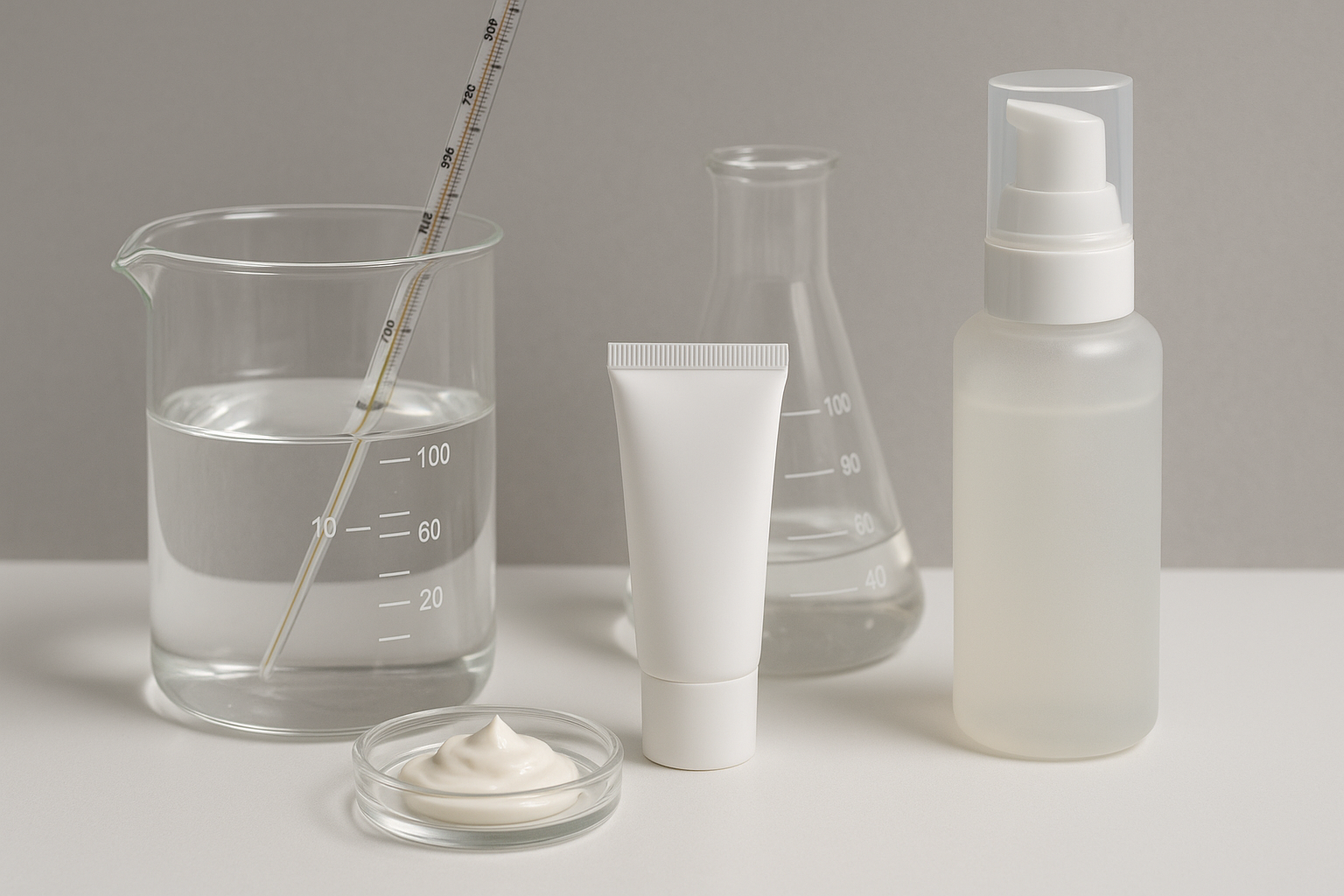

In the cosmetics industry, stability and compatibility testing play a key role in ensuring that every product reaching the market is both safe and effective throughout its intended shelf life. According to EU Cosmetics Regulation 1223/2009 and UK Schedule 34 of the Product Safety and Metrology Regulations, these tests are a mandatory part of the cosmetic product safety information. At CE.way, we provide comprehensive stability and compatibility test services to help cosmetic manufacturers meet all regulatory requirements.
Why are stability and compatibility tests important?
A cosmetic product must maintain its physical, chemical, and microbiological quality during manufacturing, storage, and consumer use. The stability test helps determine whether the product meets the necessary standards under various environmental conditions. It also helps assign the correct shelf life or period after opening (PAO), ensuring consumers receive products that are both safe and functional.
The compatibility test, on the other hand, examines how well the packaging interacts with the product. Packaging is not just a container—it protects the product from external factors such as light, heat, and humidity. However, packaging materials can sometimes affect the formula by leaching substances into it. Therefore, testing the compatibility between the product and its packaging is crucial to ensure that the packaging preserves the integrity of the cosmetic inside.
How are the tests performed?
There are two main approaches to stability testing:
- Real-time testing, which simulates normal storage conditions and lasts as long as the product’s claimed shelf life.
- Accelerated testing, which exposes the product to elevated temperatures (typically 37°C, 40°C, or 45°C) for about three months, providing a faster indication of long-term stability.
At CE.way, we go beyond these standard procedures. We also perform refrigeration and freeze-thaw tests, which simulate the conditions products experience during transport. For products in transparent packaging, we conduct sunlight exposure tests to evaluate the impact of UV light.
During testing, we monitor several critical parameters such as:
- pH, viscosity, and density
- Organoleptic properties (appearance, odor, texture)
- Microbiological stability
- Packaging interaction and material response
All our stability and compatibility tests are performed according to ISO 18811:2018, ensuring the highest quality and compliance standards.
When should tests be repeated?
Every time a formula, packaging material, or manufacturing process changes, stability and compatibility testing must be repeated. This ensures continuous compliance with EU and UK cosmetics regulations and protects your brand from potential quality issues.
Partnering with CE.way for your regulatory needs
At CE.way, we understand that compliance can be complex. That’s why we provide complete support throughout the stability and compatibility test process—helping you select the right testing method, interpret the results, and maintain full documentation as part of your Product Information File (PIF).
With our expertise in cosmetics regulatory services, we ensure your products are tested, verified, and compliant before entering the market. From stability testing to safety assessments, CPNP notifications, and EU representation, CE.way is your trusted partner for navigating international cosmetic regulations with confidence.