Location & Date
Ljubljana
01.09.2026 10:00 - 23.09.2026 16:00
Organizer
Ljubljana Festival
Website
Website
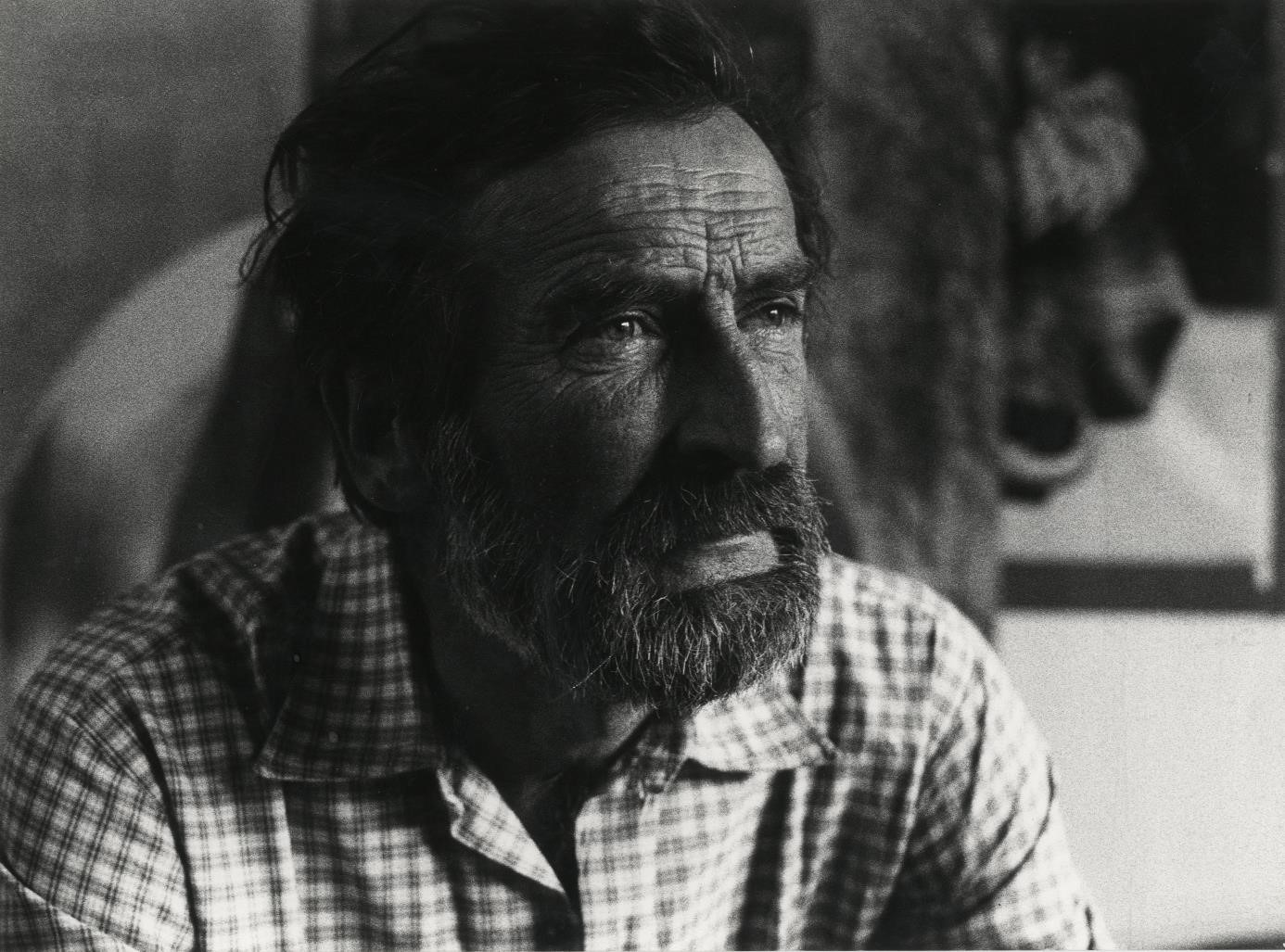
Hommage à France Rotar – 25 years on is the tenth in a series of sculpture exhibitions through which the Ljubljana Festival presents small-scale sculpture by Slovene sculptors of the post-war period. These exhibitions, dedicated to artists who have shaped the Slovene cultural space, preserve their memory while also drawing our attention to our responsibility towards artistic heritage. They encourage an awareness that the significance of a work of art is not preserved solely in historical overviews, but above all through renewed, thoughtful encounters that reveal the creative stature of these artists and highlight the works that have secured their place in the history of artistic thought. France Rotar established himself in the Slovene cultural space with a restrained, persistent and highly distinctive sculptural language. He belongs to the generation of Slovene modernist sculptors of the second half of the 20th century who gradually moved sculpture away from its narrative and representative role and directed it towards exploration of the autonomy of form, mass and space. In his symbolically conceived sculptural series, Rotar repeatedly returned to the fundamental processes of emergence and disappearance. His sculptures portray not events but states: birth, growth, concentration, decay and the silent death of sculptural matter. Rather than a passive bearer of form, the material is the space in which these processes remain and become visible. Into these processes Rotar wove reflections on nature and humanity, seen and experienced as an inseparable relationship of interdependence in which growth and decay, endurance and fragility meet. Although Rotar’s sculpture draws on the world of nature, it never stops at the merely organic; it invariably reaches towards humanity and human civilisation as an inseparable part of it. As a force that shapes nature while remaining dependent on it. At the core of Rotar’s sculptures lies a reflection on this coexistence. On the tension between the natural and the shaped, between givenness and intervention, between endurance and transience. His forms do not offer judgement; instead, they hold a question: how to be part of a world in constant change, and how, within it, to resist disappearance. Rotar’s place in the history of Slovene art is defined by the breadth of his work, spanning both small-scale sculpture and public sculpture. At both scales he maintained the same fundamental stance: a trust in form that captures the world in volumes, surfaces and proportions. His works do not address the viewer through spectacle or expressive gesture, but through the inner tension of volume, through the relationship between weight and balance, between fullness and emptiness. As Milena Koren Božič tellingly noted in the catalogue of his 1999 retrospective exhibition: “Purity of form and material, simplicity, hyper-reduction, minimal tonal variation, sculptural sensibility and volume as the primary means of sculptural expression are endemic to France Rotar.” France Rotar is unquestionably one of the most recognisable representatives of contemporary Slovene sculpture. The exhibition in Križevniška Church offers a new, alternative view of Rotar’s work. The sacred space, with its historical layering, silence and restrained rhythm, establishes a mode of viewing that is close to Rotar’s sculpture. Sculpture here is not presented as an object, but as a presence. In this setting it becomes clear that Rotar’s works are not merely carriers of iconographic meaning, but also creators of the conditions for experience, for holding the gaze and for slow perception. The exhibition presents a selection of smaller-scale works from various series, with an emphasis on the famous spheres, cores and blocks, on abstracted forms in bronze, the material in which his ideas came fully to life. Bronze was his central material: “I have spent my whole life grinding, casting, polishing … but in doing so I reward myself. There is nothing more beautiful than discovering, in the dying of matter, a space, the seed of a new existence…” The selection does not follow chronology or representativeness, but an inner affinity of form, namely spherical forms and markedly elongated rectangular forms. For Rotar, form is not a symbol in the classical sense, but a concentration of mass, time and the sculptor’s touch. These are forms in which the figure does not dissolve, but condenses. Like the memory of a body that is still present, yet no longer recognisable. As art historian Špelca Čopič notes: “He speaks of dying and being as if he were speaking of a human being, yet in front of him he has a bronze sphere.” In public spaces Rotar’s sculptures function as both monumental and restrained. They do not compete with their surroundings, but organise them. They act as spatial situations that influence movement, orientation and the rhythm of the space. In a sacred setting, however, their power is heightened still further: silence does not become emptiness, but density, while the sculpture becomes its anchoring point. Rotar’s artistic career began at the School of Arts and Crafts in Ljubljana and continued at the Academy of Fine Arts, where he graduated in sculpture. An important role in his development was played by further training in Italy, in particular his study of casting techniques in Verona, which decisively shaped his relationship with bronze. For Rotar, the material he worked with was not merely a medium, but a counterpart: a bearer of weight, historical memory and duration. “I can hear when bronze flows correctly, when two pieces of iron fuse properly in welding.” His teaching work at the Academy of Fine Arts in Ljubljana, where he was a professor of sculptural technology, was not a marginal chapter of his career, but an organic part of his artistic stance. For Rotar, an understanding of material, process and the emergence of form was always linked to a work ethic, to respect for matter and to a rejection of quick solutions. Twenty-five years after his death, Rotar’s oeuvre remains alive precisely because of its restraint. His sculptures do not offer answers, but space for questions; they do not explain, but make experience possible. In a time of accelerated viewing and visual overload, they function as an invitation to slow down. To an encounter with mass, space and an enduring silence.

If you're looking to create an unforgettable event, don't miss the opportunity to add it to our calendar! Our platform offers a variety of tools and resources to help you plan and promote your event, making it easier than ever to make a lasting impression. So what are you waiting for? Add your event today and let's make it a success!
Odprti smo za različne oblike sodelovanja, ki koristijo tako vam kot našim slovenskim in mednarodnim bralcem. Vaša vsebina je lahko izpostavljena na veliko načinov skozi naše medije. Za več informacij o možnostih sodelovanja nas kontaktirajte in skupaj bomo ustvarili koristno partnerstvo. Sodelovanje je lahko celo brezplačno! Pišite nam na [email protected].
We are open to various forms of collaboration that benefit both you and our Slovenian and international readers. Your content can be highlighted in many ways through our media. For more information about collaboration opportunities, contact us, and together we will create a beneficial partnership. Collaboration can even be free of charge! Write to us at [email protected].
Prijavite se na naše tedenske e-novice in raziskujte lepote Slovenije, njene skrite kotičke. Bodite obveščeni o prihajajočih dogodkih in tradicijah ter okusite ponudbo najboljših slovenskih restavracij.

Sign up for our weekly newsletter to explore the beauty of Slovenia and it's many wonders, and to learn about upcoming events, traditions, best Slovene restaurants and much more.