














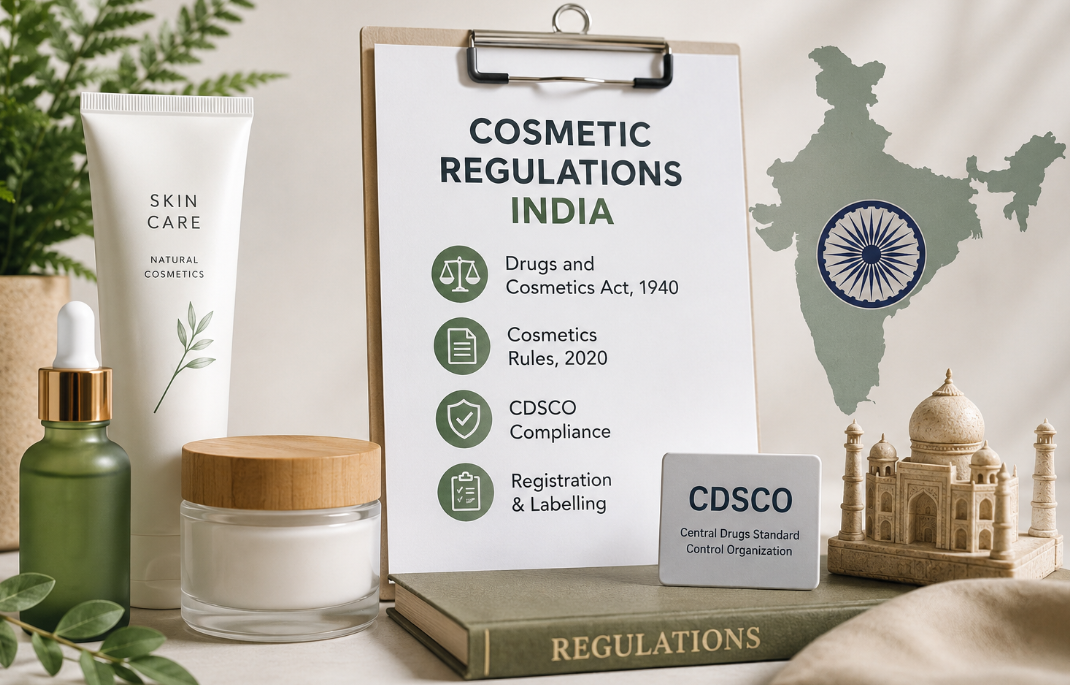

India has become one of the fastest-growing beauty and personal care markets in the world. Rising consumer demand, increasing disposable income, and growing interest in international cosmetic brands have made India an attractive destination for cosmetic manufacturers looking to expand globally.
However, before launching products in India, companies must understand the country’s regulatory framework, registration requirements, labelling obligations, and import procedures. Compliance is essential, as cosmetic products cannot legally enter the Indian market without meeting the requirements established by the national regulatory authorities.
Why India Is an Attractive Market for Cosmetic Brands
India’s cosmetics and personal care sector continues to experience significant growth across multiple categories, including:
- Skincare products
- Haircare products
- Colour cosmetics
- Fragrances
- Personal hygiene products
- Premium beauty products
International brands are increasingly targeting Indian consumers due to the country’s large population, expanding middle class, and rapidly growing e-commerce sector.
At the same time, regulatory authorities have strengthened compliance requirements to ensure consumer safety and product quality, making proper regulatory preparation more important than ever.
Understanding Cosmetic Regulations in India
Cosmetics in India are primarily regulated under two key legislative frameworks:
- Drugs and Cosmetics Act, 1940
- Cosmetics Rules, 2020
These regulations govern cosmetic product safety, manufacturing, importation, labelling, registration, distribution, and market surveillance. Compliance is overseen by the Central Drugs Standard Control Organization (CDSCO), which serves as India’s national regulatory authority for cosmetics and healthcare products.
Any company planning to market cosmetic products in India must ensure that its products meet CDSCO requirements before commercial distribution begins.
What Products Are Considered Cosmetics in India?
Indian regulations define cosmetics as products intended to be applied to the human body for cleansing, beautifying, promoting attractiveness, or altering appearance.
Examples of cosmetic products include:
- Face creams and serums
- Body lotions
- Shampoos and conditioners
- Perfumes and fragrances
- Lipsticks and foundations
- Nail care products
- Personal grooming products
While this definition appears straightforward, product classification can become more complex when marketing claims are involved.
The Importance of Product Claims
One of the most common compliance challenges involves product claims.
In India, products that claim to:
- Treat diseases
- Cure medical conditions
- Prevent illnesses
- Influence bodily functions
may no longer be classified as cosmetics.
Examples include:
- Hair regrowth products
- Anti-baldness treatments
- Medicated shampoos
- Anti-fungal creams
- Anti-eczema products
- Anti-psoriasis products
- Acne treatment products claiming therapeutic effects
These products may fall under pharmaceutical or medicinal regulations instead of cosmetic legislation, resulting in entirely different regulatory requirements.
For this reason, claim review is often one of the most critical stages of market-entry preparation.
Is Cosmetic Registration Mandatory in India?
Yes.
Imported cosmetic products must be registered with the appropriate Indian authorities before they can be legally marketed and sold within the country.
The registration process is administered through CDSCO and applies to foreign cosmetic manufacturers seeking access to the Indian market.
Failure to complete registration can result in customs delays, product detention, or refusal of market access.
The Role of CDSCO
The Central Drugs Standard Control Organization (CDSCO) is responsible for regulating cosmetic products throughout India.
Its responsibilities include:
- Reviewing registration applications
- Evaluating compliance documentation
- Assessing product safety information
- Monitoring imported cosmetics
- Enforcing cosmetic regulations
- Conducting regulatory inspections when required
For international cosmetic brands, CDSCO approval represents a key milestone in the market-entry process.
Why Foreign Brands Need an Authorized Indian Agent
International manufacturers cannot directly manage all regulatory obligations in India.
Instead, foreign companies must appoint an Authorized Indian Agent or establish a local subsidiary that can act on their behalf.
The Authorized Indian Agent typically:
- Submits registration applications
- Communicates with CDSCO
- Maintains regulatory documentation
- Supports post-market compliance
- Coordinates recalls or market withdrawals if necessary
This representative effectively serves as the local regulatory contact point for Indian authorities.
Selecting an experienced representative can significantly simplify the registration process and reduce potential delays.
Documentation Required for Cosmetic Registration
One of the most important aspects of Indian cosmetic compliance is the preparation of a complete registration dossier.
Commonly required documentation includes:
- Manufacturer details
- Manufacturing site information
- Product and brand details
- Product formulations
- Product specifications
- Manufacturing licence
- Free Sale Certificate
- Safety information
- Testing methods
- Product labels
The quality and completeness of submitted documentation often determine the speed of regulatory review and approval.
Cosmetic Labelling Requirements in India
Labelling compliance is a critical component of market access.
All imported cosmetic products must comply with Indian cosmetic labelling requirements and relevant Legal Metrology provisions.
Regulators review product labels to ensure:
- Accurate product identification
- Proper manufacturer information
- Required declarations
- Regulatory compliance
- Consumer transparency
Incorrect or incomplete labels may delay product approval or create challenges during importation.
As a result, label review should always be completed before submission of registration applications.
Product Safety and Quality Requirements
Cosmetic products marketed in India must meet strict safety and quality standards.
Manufacturers are expected to demonstrate compliance with applicable requirements relating to:
- Product safety
- Ingredient compliance
- Heavy metal limits
- Microbiological quality
- Manufacturing quality standards
- Restricted and prohibited substances
Products containing banned ingredients or failing safety specifications may be denied registration or prevented from entering the market.
For many international brands, safety assessments and formulation reviews are therefore an essential part of regulatory preparation.
Understanding the Registration Process
Although each application may vary slightly depending on the product category, the registration pathway generally follows several key stages.
Step 1: Product Classification
The first step is determining whether the product qualifies as a cosmetic under Indian legislation.
Incorrect classification can lead to significant regulatory complications later in the process.
Step 2: Appointment of an Authorized Indian Agent
Foreign manufacturers must designate a local representative responsible for regulatory communication and compliance activities.
Step 3: Preparation of Documentation
All required regulatory, technical, and safety documents must be compiled and reviewed before submission.
Step 4: Application Submission
Registration applications are submitted through the CDSCO system together with supporting documentation and applicable fees.
Step 5: Regulatory Review
Authorities evaluate the submitted dossier and may request additional clarifications or supporting information.
Step 6: Registration Approval
Following successful review, the cosmetic product receives registration approval and may be legally imported and sold in India.
How Long Does Cosmetic Registration Take?
While timelines can vary depending on product complexity and regulatory workload, a typical cosmetic registration process takes approximately:
- 60 working days for standard review
- Additional time if supplementary testing is required
Delays may occur if documentation is incomplete or if authorities request additional information during the evaluation process.
Companies planning product launches should therefore begin compliance preparations well in advance of their intended market-entry date.
Common Challenges Faced by International Cosmetic Brands
Many foreign manufacturers encounter similar obstacles when entering the Indian market.
Common issues include:
- Incorrect product classification
- Incomplete technical documentation
- Labelling non-compliance
- Missing certificates
- Delays in appointing a local representative
- Ingredient restrictions
- Regulatory communication challenges
Early identification of these issues can significantly reduce registration timelines and regulatory risk.
Why Regulatory Support Matters
India offers tremendous opportunities for cosmetic brands, but successful market entry requires more than simply exporting products.
Manufacturers must navigate:
- Product classification requirements
- CDSCO registration procedures
- Documentation preparation
- Labelling compliance
- Safety evaluations
- Import regulations
- Ongoing regulatory obligations
Professional regulatory support helps cosmetic companies reduce risk, accelerate approvals, and ensure long-term compliance within one of the world’s most dynamic beauty markets.
At CE.way, we help cosmetic manufacturers navigate Indian cosmetic regulations, manage product registrations, prepare technical documentation, review labels, and develop efficient market-entry strategies that support successful expansion into India.