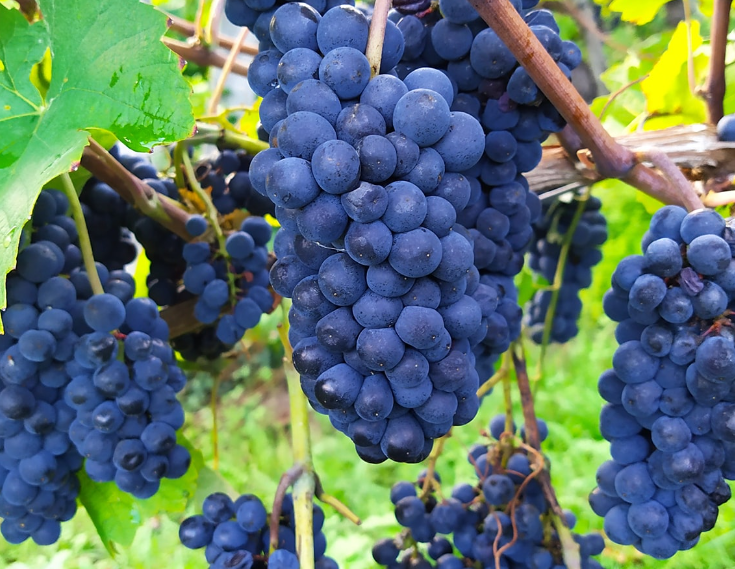
















In Kozana, among the rolling terraces of Goriška Brda, the Jakončič family has been building a wine story for almost 180 years – one in which tradition is not displayed, but lived. It began in 1847 with Mihael and Carolina Jakončič, and today continues through four distinctive wine lines: Jakončič, Carolina, Mosaic and Uvaia. Its leading lady is Rebula, Brda’s signature grape variety, which in their hands has earned some of the most important international wine awards.
From the First Vineyard in 1847 to a Modern Winery
In 1847, Mihael and Carolina Jakončič planted the family’s first consolidated vineyard in Kozana. It was a time full of opportunity: new roads and railways were being built, new markets were opening, and viticulture in Goriška Brda was becoming an increasingly important economic activity.
The family’s journey was not without challenges. The vineyards were hit by phylloxera, followed by wars and difficult living conditions, yet knowledge continued to be passed down from one generation to the next. Today, parents and children work together on the estate, while modern technology complements manual work, experience and an intuitive understanding of each vineyard and vintage.
This connection between generations remains one of the winery’s strongest foundations. The younger generation brings knowledge, energy and an international outlook, while the older generation contributes a deep understanding of Brda’s soil and the patience without which great wines cannot be made.

Between the Alps, the Adriatic and Brda’s Opoka Soil
Goriška Brda lies between the Alps and the Adriatic Sea. Its hilly landscape, mild sub-Mediterranean climate, abundant sunshine and good air circulation create excellent conditions for growing vines. Most vineyards are planted on terraces, while the characteristic soil consists of marl and sandstone – known locally as opoka – which plays an important role in shaping the minerality, freshness and structure of the wines.
At Jakončič, grapes are harvested by hand, while the timing of the harvest and the vinification process are adapted to the grape variety, vineyard site and desired wine style. Fresh wines are mainly matured in stainless-steel tanks, while more complex wines are given time in carefully selected wood. Some red wines undergo maceration for around a month before ageing for two years in 225-litre barrels made from French or Slavonian oak.
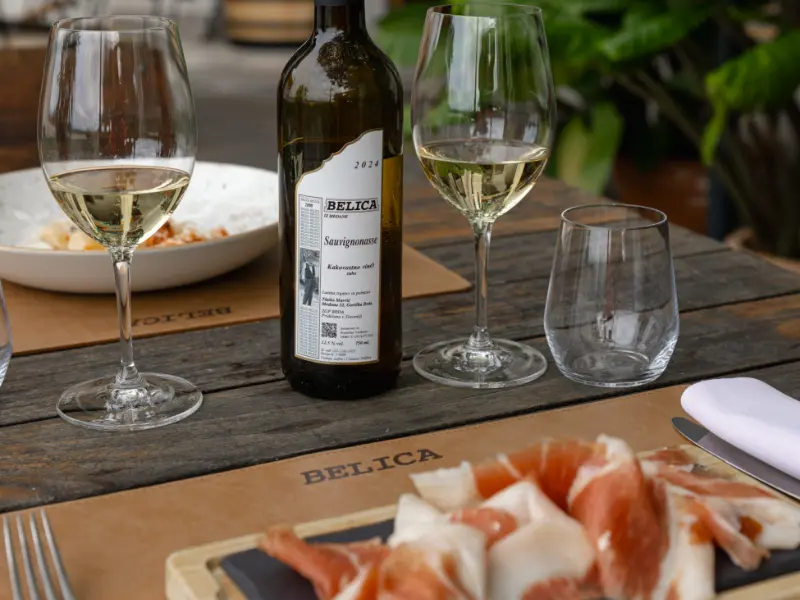
Four Wine Lines, One Family Identity
The core Jakončič range represents varietally expressive and approachable wines in which the character of the grape takes centre stage. These include Rebula, Pinot Gris, Merlot and Cabernet Sauvignon. The white wines emphasise freshness and fruit, while the reds offer ripe fruit, polished tannins and restrained use of oak.
The Carolina line, named after Carolina Jakončič, represents the winery’s more prestigious side. It includes Carolina Rebula, Bela Carolina, Rdeča Carolina, Carolina Noir and Carolina Select. Bela Carolina is a blend of Chardonnay, Rebula and Sauvignon, while Rdeča Carolina combines Cabernet Sauvignon, Merlot and Cabernet Franc. Carolina Select is made predominantly from Merlot, with an important contribution from the oldest section of the Južno vineyard, where the vines are more than 70 years old.
Mosaic is the sparkling wine line. Mosaic Brut is made predominantly from Rebula with the addition of Pinot Blanc and, following secondary fermentation in the bottle, spends two years ageing on the lees. It is complemented by Mosaic Rosé, made from Pinot Noir and Chardonnay.
The fourth, more experimental face of the winery is Uvaia – a more expressive orange-style interpretation of Pinot Gris, showing that at Jakončič, family tradition is anything but the opposite of creativity.
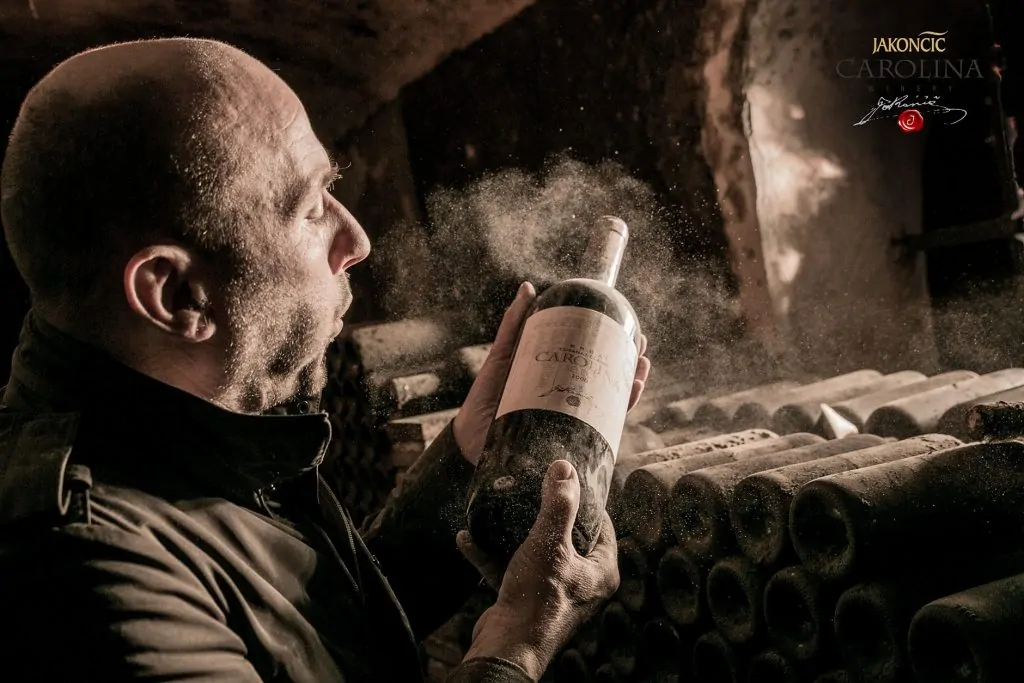
Carolina Rebula – The Wine Heroine of Brda
The winery’s most recognisable wine is Carolina Rebula. It comes from older vineyards planted on marl soils, while one of its defining features is a double harvest. The first part of the grapes is picked at the end of September to preserve freshness and fruitiness, while the second part is harvested later, when the grapes are riper and may also develop noble rot. The result is a wine that combines vibrancy, maturity, richness and the ability to evolve over a long period of time.
Carolina Rebula 2013 received 95 points and a Platinum award at the Decanter World Wine Awards in 2016. The achievement was particularly significant because it placed Rebula alongside some of the world’s most highly regarded white wines. The success was not a one-off: Carolina Rebula 2019 received the highest Tre Bicchieri – Three Glasses award in the 2024 edition of Vini d’Italia, published by Gambero Rosso.
For the family, Rebula is much more than a successful label. It is proof that a characteristic Brda grape variety, when combined with precise vineyard work, thoughtful vinification and sufficient time, can achieve remarkable complexity and international recognition.
Wine Tasting at Botega Carolina
A visit to the winery can be complemented with a tasting at Botega Carolina, a contemporary tasting and social space located on the family estate in Kozana. The classic tasting includes five selected wines accompanied by small snacks, while tastings can also be adapted to visitors’ preferences by prior arrangement.
Botega is also a place to purchase wines and an excellent introduction to the differences between fresh Rebula, the more complex Carolina wines, Mosaic sparkling wines and the bolder Uvaia range. Tastings are available throughout the year, although visitors are advised to check current opening hours and arrange their visit in advance.
Contact
Jakončič Family Estate – Carolina Jakončič Winery
Kozana 5
5212 Dobrovo v Brdih, Slovenia
Phone: +386 (0)5 30 41 215, +386 (0)31 737 263
Email: [email protected]
Orders: [email protected]
Website: www.jakoncic.eu