














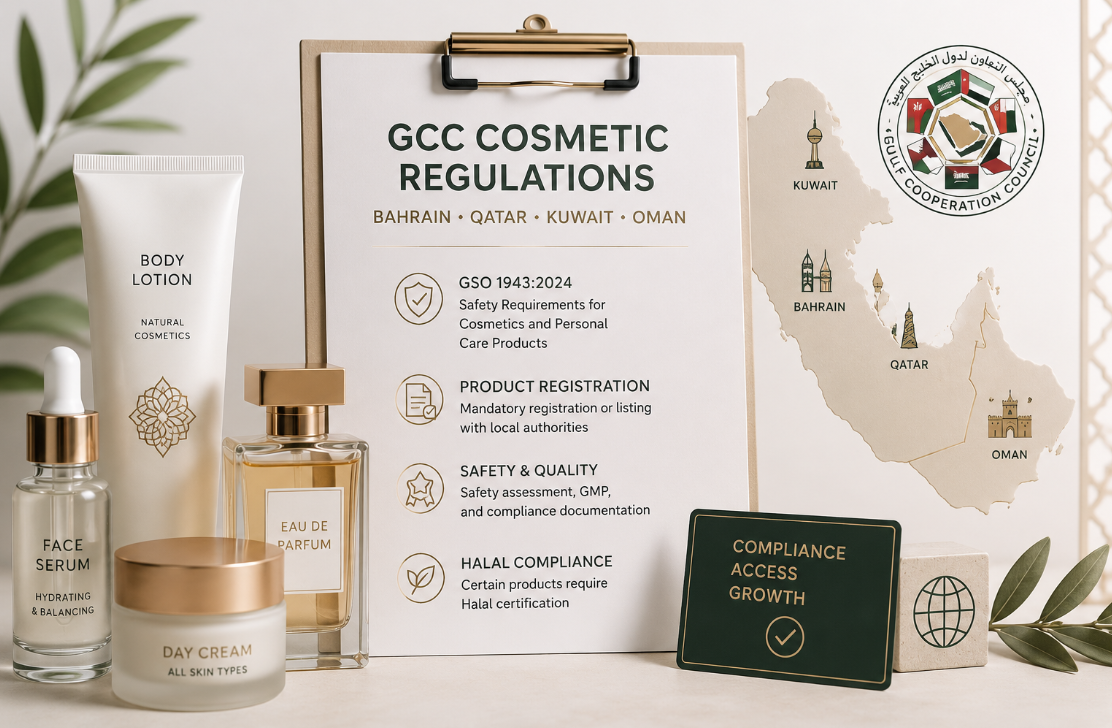

The Gulf region continues to attract international cosmetic brands looking to expand into fast-growing beauty and personal care markets. Countries such as Bahrain, Qatar, Kuwait, and Oman offer strong purchasing power, increasing demand for premium beauty products, and growing consumer interest in international cosmetic brands.
However, while these markets present significant commercial opportunities, cosmetic companies must comply with specific regulatory requirements before products can be legally imported, distributed, and sold. Understanding GCC cosmetic regulations is essential for successful market entry and long-term compliance.
Why the GCC Market Is Attractive for Cosmetic Brands
Consumers across the Gulf Cooperation Council (GCC) countries have become increasingly focused on skincare, premium fragrances, personal care products, and luxury beauty brands.
Several factors contribute to market growth:
- High consumer spending power
- Strong demand for premium cosmetics
- Expanding retail and e-commerce channels
- Growing interest in international beauty brands
- Young and beauty-conscious populations
As competition increases, regulatory compliance has become a critical requirement for companies seeking to establish a strong presence in the region.
Understanding GCC Cosmetic Regulations
Cosmetic products sold in Bahrain, Qatar, Kuwait, and Oman are primarily regulated under:
GSO 1943:2024 – Safety Requirements for Cosmetics and Personal Care Products
This standard establishes the safety, quality, and compliance requirements that cosmetic products must meet before entering GCC markets.
In addition to the harmonized GCC requirements, each country maintains specific national procedures relating to registration, product listing, importation, and labelling. Therefore, cosmetic companies must comply with both GCC-wide standards and country-specific obligations.
What Products Are Considered Cosmetics?
Under GCC regulations, cosmetic products are substances or mixtures intended for application to the external parts of the human body or oral cavity with the primary purpose of:
- Cleaning
- Perfuming
- Protecting
- Changing appearance
- Maintaining the body in good condition
Typical examples include:
- Facial skincare products
- Body lotions
- Haircare products
- Fragrances and perfumes
- Makeup products
- Oral care products
- Personal hygiene products
However, products making therapeutic claims may no longer qualify as cosmetics.
The Importance of Product Claims
One of the most common regulatory challenges involves product claims.
Products claiming to:
- Treat diseases
- Cure medical conditions
- Prevent illnesses
- Alter physiological functions
may be classified as medicines or medical devices instead of cosmetics.
Examples can include:
- Hair loss treatment products
- Acne treatment products
- Therapeutic skin creams
- Anti-fungal formulations
- Products claiming medical benefits
Because classification determines the regulatory pathway, claim review should always be conducted before market entry.
Cosmetic Registration Is Mandatory
Before cosmetic products can be sold in Bahrain, Qatar, Kuwait, or Oman, they must typically be registered or listed with the relevant local authority.
The registration process allows regulators to verify:
- Product safety
- Ingredient compliance
- Labelling compliance
- Manufacturing quality
- Product documentation
Following approval, the product receives a registration certificate or product listing authorization allowing legal commercialization within the target country.
Without registration, products may face customs detention, import restrictions, or market withdrawal.
Why You Need a Local Agent
Unlike some regions where manufacturers can register products directly, GCC countries generally require cosmetic registrations to be handled through a local representative.
This local agent or distributor acts as the primary contact with regulatory authorities and is responsible for:
- Submitting registration applications
- Maintaining regulatory records
- Managing communications with authorities
- Supporting post-market obligations
- Assisting with corrective actions or recalls
Selecting a knowledgeable local partner can significantly simplify the registration process and help avoid unnecessary delays.
Understanding Risk-Based Product Classification
Many GCC authorities categorize cosmetic products according to risk levels.
Products are typically classified as:
Low-Risk Cosmetics
Examples may include:
- Standard moisturizers
- Body lotions
- Basic cleansing products
Medium-Risk Cosmetics
Examples may include:
- Certain active skincare products
- Specialized beauty treatments
High-Risk Cosmetics
Examples may include:
- Products intended for sensitive populations
- Products containing certain active ingredients
- Products requiring additional safety review
The classification depends on:
- Ingredients
- Intended use
- Target population
- Exposure level
- Potential health risks
Understanding the correct category is an important first step in preparing a registration strategy.
Documentation Required for Registration
A complete technical dossier is essential for successful registration.
Typical documentation requirements include:
- Product artwork and packaging
- Product images
- Free Sale Certificate
- Certificate of Analysis
- Ingredient list
- Product Information File (PIF)
- GMP Certificate
- Safety Assessment Report
- Laboratory testing reports
- Product samples when requested
Regulatory authorities use these documents to assess product safety, quality, and compliance before granting approval.
The Importance of Safety Assessment Reports
One of the most important components of a cosmetic dossier is the Safety Assessment Report.
This document typically evaluates:
- Toxicological profiles
- Ingredient safety
- Potential allergenic substances
- Product exposure levels
- Risk assessments
- Supporting safety evidence
Regulators expect companies to demonstrate that products are safe for their intended use under normal conditions.
A robust safety assessment often plays a decisive role in obtaining successful registration approval.
GMP Compliance and Product Quality
Manufacturers seeking access to GCC markets are generally expected to demonstrate compliance with Good Manufacturing Practices (GMP).
GMP compliance helps ensure:
- Consistent product quality
- Manufacturing traceability
- Controlled production processes
- Product safety
- Regulatory confidence
Authorities frequently request GMP certificates as part of the registration dossier.
For international manufacturers, ISO 22716 certification is often considered a valuable compliance tool.
Halal Considerations in Cosmetic Products
An important aspect of GCC market access involves Halal compliance.
Certain cosmetic categories may be expected to comply with Halal requirements, particularly where products contain ingredients that could conflict with Islamic principles.
Areas that often receive additional scrutiny include:
- Alcohol content
- Animal-derived ingredients
- Pork derivatives
- Certain processing methods
Although Halal certification is not always mandatory for every cosmetic product, obtaining certification can provide additional market advantages and consumer confidence.
The Cosmetic Registration Process
While procedures differ slightly between countries, the registration pathway generally follows several stages.
Step 1: Product Review and Classification
Authorities assess whether the product qualifies as a cosmetic and determine the applicable regulatory category.
Step 2: Dossier Preparation
Technical, safety, quality, and administrative documents are compiled and reviewed.
Step 3: Application Submission
The local representative submits the registration dossier to the relevant national authority.
Step 4: Regulatory Evaluation
Authorities assess product documentation and may request clarifications or additional information.
Step 5: Registration Approval
Upon successful review, the product receives registration approval or listing authorization.
Depending on the country, approvals are typically valid for several years before renewal becomes necessary.
Post-Market Compliance Responsibilities
Regulatory obligations do not end once registration is granted.
Companies must continue to comply with post-market surveillance requirements, including:
- Monitoring adverse effects
- Reporting serious incidents
- Managing recalls when necessary
- Updating authorities regarding formulation changes
- Updating labelling modifications
- Maintaining compliance documentation
Authorities across the GCC have increasingly strengthened post-market surveillance activities, making ongoing compliance an important part of market access strategies.
Registration Timelines
Most cosmetic registrations in Bahrain, Qatar, Kuwait, and Oman are completed within:
- 30 to 60 working days under standard procedures
Additional laboratory testing or document requests may extend timelines by several weeks.
Because processing times vary between countries and authorities, manufacturers should begin preparations well in advance of planned product launches.
Why Professional Regulatory Support Matters
Although GCC countries share many common cosmetic requirements, each market maintains its own administrative procedures, documentation expectations, and approval processes.
Successful registration requires expertise in:
- Product classification
- GCC cosmetic regulations
- Safety assessments
- PIF preparation
- GMP compliance
- Halal considerations
- Country-specific registration procedures
- Post-market obligations
At CE.way, we help cosmetic manufacturers navigate cosmetic regulations across Bahrain, Qatar, Kuwait, and Oman by providing regulatory strategy, safety assessments, Product Information Files, registration support, and ongoing compliance services that help brands enter GCC markets efficiently and confidently.