















Planning a day in Kamnik, a trip to Velika Planina or a hike in the Kamnik-Savinja Alps? Checking the weather is one of the first things worth doing.
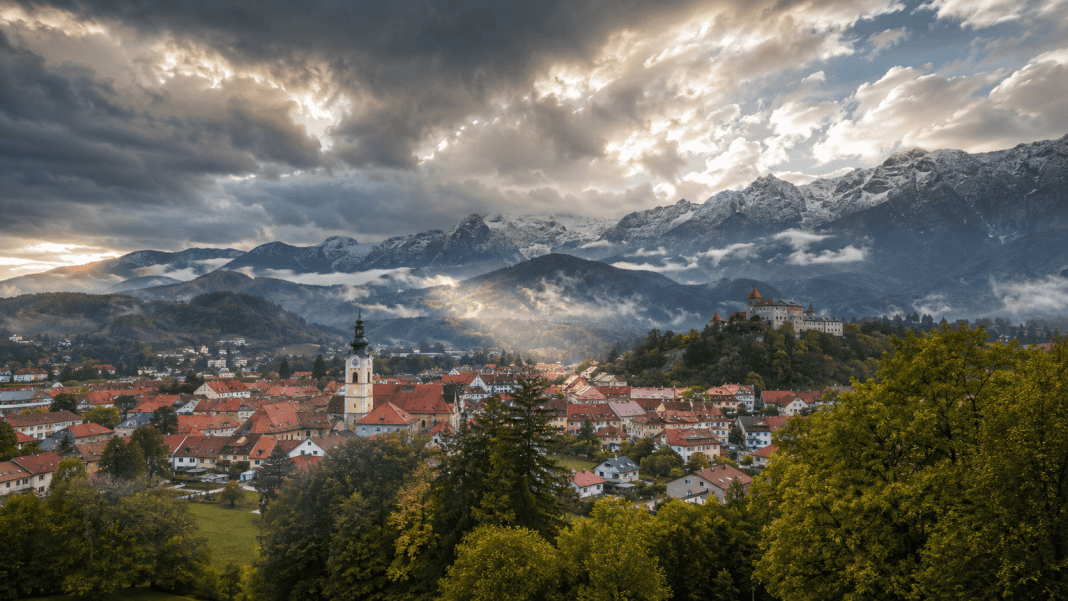
Kamnik sits at the foot of the Alps, which gives the town one of the most beautiful settings in Slovenia – but it also means that weather conditions can vary considerably between the town, the surrounding valleys and the mountains above it.
A warm and sunny afternoon in the centre of Kamnik does not necessarily mean the same conditions on Velika Planina. Higher up, temperatures can be noticeably lower, winds stronger and clouds can develop more quickly.
This guide explains what to expect from Kamnik weather throughout the year, when to visit, what temperatures are typical in different seasons and what to check before heading into the mountains.

What Is the Weather Like in Kamnik?
Kamnik experiences four distinct seasons.
Summers are generally warm and can become hot during heatwaves, while winters are cold, with temperatures frequently dropping below freezing at night. Spring and autumn bring milder temperatures but also more changeable weather.
Rain is possible throughout the year.
The nearby mountains also have a strong influence on local conditions, which means weather can sometimes change faster than visitors expect.
For a normal day exploring the town, checking the daily forecast is usually enough.
For Velika Planina, Kamniška Bistrica or higher mountain routes, you should look more closely at wind, precipitation, thunderstorms and mountain-specific forecasts.
Kamnik Weather Today
If you are wondering about Kamnik weather today, check the latest forecast shortly before leaving.
For sightseeing in town, pay particular attention to:
- temperature,
- chance of rain,
- hourly precipitation,
- wind,
- thunderstorms.
Kamnik’s historic centre is compact, so a passing shower does not necessarily need to ruin the day.
You can explore the streets around Šutna, visit Mali Grad, stop for coffee or lunch and adjust your plans according to the weather.
If you are heading into the mountains, however, weather deserves much more attention.
A short rain shower in town may simply mean opening an umbrella. A thunderstorm on an exposed mountain route is a completely different matter.
Kamnik Weather Tomorrow and the Next Few Days
A forecast for tomorrow is usually useful for deciding how to structure your day.
If stable, dry weather is expected, it may be a good opportunity to visit Velika Planina, explore Kamniška Bistrica or plan a longer outdoor activity.
If heavy rain or thunderstorms are forecast, you may prefer to keep your plans closer to town.
Longer-range forecasts are useful for understanding the general trend, but weather forecasts naturally become less precise the further ahead you look.
If a mountain trip is important to your plans, check the forecast again the evening before and on the morning of your trip.
Kamnik Weather in Spring
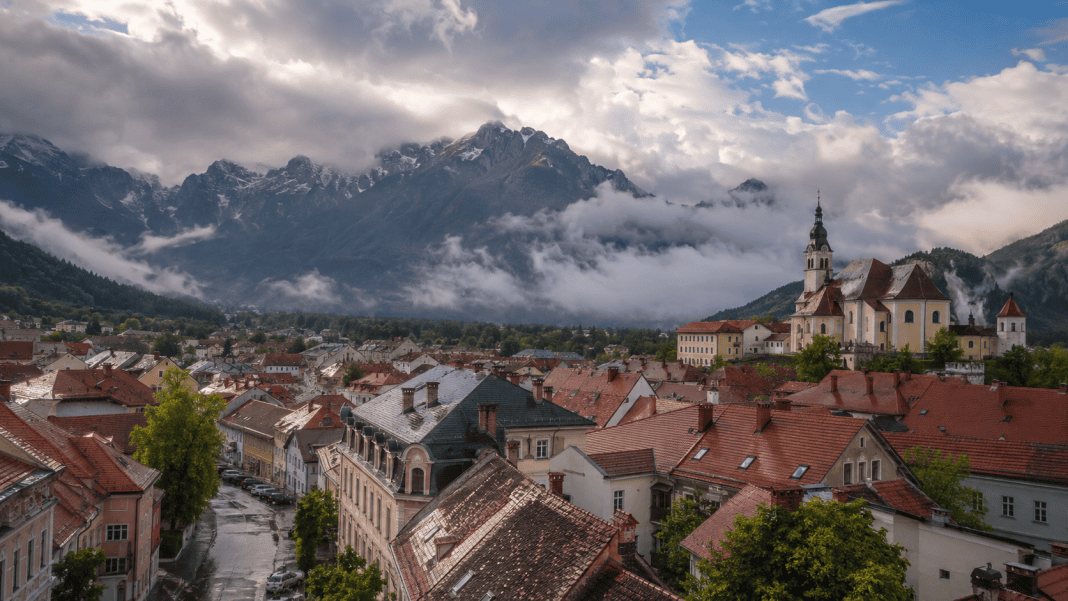
Spring is one of the most attractive times to visit Kamnik.
Days become longer, temperatures rise and the landscape around the town turns increasingly green.
March can still feel wintry, particularly in the mornings and at higher elevations. April usually brings milder weather but can also be changeable and rainy.
By May, conditions are often very pleasant for exploring the town, cycling and hiking at lower elevations.
The important thing to remember is that spring arrives later in the mountains than in Kamnik itself.
Even when the town feels warm, snow and winter-like conditions may remain at higher elevations.
For a spring visit, layers are the best choice.
Kamnik Weather in Summer
June, July and August are the warmest months and among the most popular periods for visiting Kamnik and the surrounding mountains.
During periods of hot summer weather, temperatures in Kamnik can rise above 30°C.
On very warm days, exploring the old town is more pleasant in the morning or later in the afternoon.
Bring water, sun protection and light clothing if you are staying in town.
The mountains provide an escape from the heat, but do not assume that hot weather in Kamnik means you can head to Velika Planina in the same clothes.
At higher elevations it is cooler, wind can make it feel colder and conditions can change quickly.
Summer thunderstorms are another important consideration.
When thunderstorms are possible, earlier departures are generally preferable for mountain trips. Always check the latest forecast before heading out.
Kamnik Weather in Autumn
Autumn can be one of the best seasons to experience Kamnik.
September often combines pleasant temperatures with fewer extremely hot days, making it excellent for walking, cycling and hiking.
As autumn progresses, mornings and evenings become colder and the days noticeably shorter.
October brings beautiful colours to the forests around Kamnik and can offer excellent conditions for outdoor activities when the weather is stable.
Rainy periods are also possible, however, and trails can remain wet or slippery after rainfall.
By November, colder and greyer conditions become increasingly common and the first snow can already appear in the mountains.
For many travellers who want to combine Kamnik, Velika Planina and outdoor activities, September and early October are particularly attractive.

Kamnik Weather in Winter
Winter gives Kamnik a completely different atmosphere.
Temperatures can fall below freezing, particularly overnight and in the morning, and snow is possible.
Snow cover in the town itself is not guaranteed throughout winter.
Higher areas are another story.
The Kamnik-Savinja Alps experience genuine mountain winter conditions, and Velika Planina can be snowy even when the situation in Kamnik is completely different.
Winter mountain trips require significantly more preparation, appropriate footwear and clothing, and an understanding of current conditions.
Do not use the temperature displayed for Kamnik as your only guide for deciding what to wear or whether a mountain trip is suitable.
Kamnik Temperatures: Town vs Mountains
One of the most useful things to understand about Kamnik weather is the effect of elevation.
Kamnik lies in the valley, while many of the area’s most popular attractions are considerably higher.
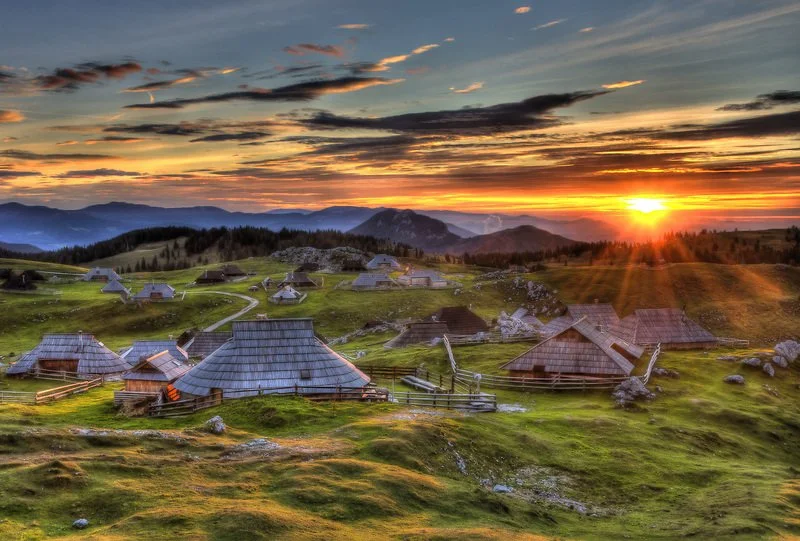
Velika Planina is around 1,500–1,600 metres above sea level, depending on the part of the plateau you visit.
That difference in elevation can translate into a significant temperature difference.
On a hot summer day, this can be extremely welcome.
On a cloudy or windy day, it can make the mountains feel surprisingly cold.
This is why a light additional layer belongs in your bag even when you leave Kamnik in warm sunshine.
Velika Planina Weather
If Velika Planina is the main reason for your visit, check the weather on Velika Planina separately from the weather in Kamnik.
Do not rely solely on the weather icon for the town.
Look at:
- temperature at altitude,
- wind,
- precipitation,
- visibility,
- cloud cover,
- thunderstorm risk.
The plateau is exposed and weather can feel very different from conditions in the valley.
In summer, carry a warmer layer and some protection from rain.
In colder months, proper footwear and winter clothing become increasingly important.
If the conditions look unsuitable, changing your plan is usually the better decision.
Velika Planina will still be there tomorrow.
Weather in the Kamnik-Savinja Alps
Planning to continue beyond Velika Planina into the Kamnik-Savinja Alps?
Then a standard town forecast is not enough.
Mountain weather forecasts provide information for different elevations and can show important differences in temperature, wind and precipitation.
Conditions on peaks such as Grintovec, for example, cannot be judged simply from what the weather looks like in Kamnik.
Cloud, fog, wind, thunderstorms, rain and snow all have greater consequences in high mountain terrain.
For serious mountain activities, weather should be part of your route planning rather than something you check as an afterthought.
Rain in Kamnik
Rain can occur at any time of year, but it does not necessarily mean you should cancel a visit to Kamnik.
If you are staying in town, simply adjust your day.
A rainy period can be used for a longer lunch, café stop, museum visit, shopping or a wellness break.
Terme Snovik, located outside Kamnik, is another useful option when the weather does not cooperate with your outdoor plans.
Short showers can also pass relatively quickly.
The main distinction is again between the town and the mountains.
Rain in Kamnik may be inconvenient.
Poor weather high in the Alps can become a safety issue.
What to Do in Kamnik When It Rains
A rainy forecast does not mean there is nothing to do.
Consider combining shorter outdoor periods with indoor activities.
You can:
- explore the historic centre between showers,
- discover Kamnik’s cafés and restaurants,
- visit local museums and cultural attractions,
- enjoy a wellness day,
- explore local shops,
- visit Terme Snovik,
- postpone the mountain part of your trip until conditions improve.
Kamnik’s relatively small size makes it easy to change plans without losing an entire day.
Best Time to Visit Kamnik
There is no single best month to visit Kamnik.
The ideal time depends on what you want to do.
May and June are excellent for spring landscapes, walking, sightseeing and increasingly pleasant temperatures.
July and August are ideal for long days and mountain activities, although the town can become hot and afternoon thunderstorms are possible.
September is one of the best all-round months, with generally pleasant temperatures and excellent conditions for combining sightseeing with outdoor activities.
Early October can also be beautiful, particularly when autumn colours arrive.
Winter offers a completely different experience and can be particularly attractive for visitors looking for snow, wellness and a quieter atmosphere.
For hiking, current conditions matter more than the name of the month.
What to Wear in Kamnik
For sightseeing in Kamnik, dress as you would for any Central European destination with four seasons.
In summer, choose light clothing, comfortable shoes and sun protection.
In spring and autumn, layers are the most practical solution.
In winter, bring warm clothing and footwear suitable for cold or wet conditions.
If you are visiting Velika Planina or heading further into the mountains, pack more carefully.
Even in summer it is sensible to carry:
- a warmer layer,
- a light waterproof jacket,
- suitable walking shoes,
- water,
- sun protection.
The more serious the hike, the more important preparation becomes.
Where to Check the Kamnik Weather Forecast
There are many international weather apps and websites that provide a quick Kamnik weather forecast.
For official Slovenian meteorological information, check ARSO – the Slovenian Environment Agency.
ARSO provides forecasts, weather warnings, precipitation radar and dedicated mountain-weather information.
The mountain forecast is especially useful when travelling into the Kamnik-Savinja Alps, where the agency publishes conditions and forecasts for different elevations.
For a simple walk around Kamnik, your usual weather app may be all you need.
For a day in the mountains, look deeper.
Kamnik Weather and ARSO
ARSO is Slovenia’s official national meteorological service and is particularly useful when conditions are unsettled.
The precipitation radar helps show where rain is currently occurring and how precipitation is moving.
Official weather warnings are valuable when stronger thunderstorms, heavy rain, wind, snow, heat or other potentially hazardous conditions are expected.
For detailed information about the radar, warnings and official local forecast, see our separate guide to ARSO weather in Kamnik.
This article is designed instead to help you understand what Kamnik weather means for planning a visit throughout the year.
Frequently Asked Questions About Kamnik Weather
What is the weather like in Kamnik?
Kamnik has four distinct seasons, with warm to hot summers, cold winters and changeable spring and autumn weather. Rain is possible throughout the year.
What are the hottest months in Kamnik?
July and August are generally the warmest months. During heatwaves, temperatures can rise above 30°C.
Does it snow in Kamnik?
Yes, snow is possible in winter, although continuous snow cover in the town is not guaranteed. Snow is much more common and persistent at higher elevations.
Is Velika Planina colder than Kamnik?
Yes. Velika Planina is considerably higher than Kamnik, so temperatures are generally lower and conditions can also be windier and more exposed.
What is the best time to visit Kamnik?
Late spring and early autumn are excellent for combining sightseeing with outdoor activities. Summer is particularly popular for mountain trips.
Where can I check Kamnik weather today?
Use an up-to-date weather forecast shortly before your visit. For official Slovenian forecasts and weather warnings, check ARSO.
Are thunderstorms common in summer?
Summer thunderstorms are possible, particularly later in the day. Check the latest forecast before heading into the mountains and consider an early start for longer hikes.
Should I bring a rain jacket to Kamnik?
A lightweight waterproof layer is useful for active trips and particularly recommended if you are going into the mountains.
Can I visit Kamnik in winter?
Absolutely. The town can be visited throughout the year. Mountain activities, however, require considerably more preparation during winter.
Can I use the Kamnik forecast for the Kamnik-Savinja Alps?
Not as your only source. Weather at higher elevations can be significantly different, so check a dedicated mountain forecast before heading into the Alps.
Kamnik Weather: Check the Town and the Mountains Separately
Perhaps the most important weather advice for Kamnik is also the simplest:
check the forecast for where you are actually going.
If you are exploring the old town, look at the weather for Kamnik.
If you are heading to Velika Planina, check conditions at altitude.
If you are hiking higher into the Kamnik-Savinja Alps, use a proper mountain forecast.
The distances between these places may be small, but the weather can be very different.
That contrast is part of what makes Kamnik such an interesting destination.
Within a single day, you can move from cafés and medieval streets to alpine pastures and high mountain scenery.
Just make sure the weather comes along with yo