












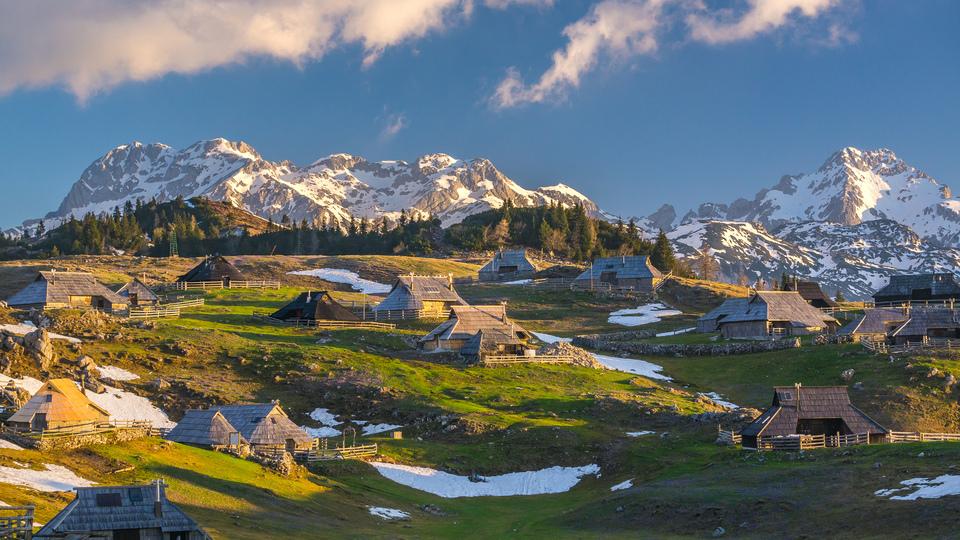

The valley may be basking in sunshine when the plateau above has disappeared into cloud. This is one of the charms of travelling in the Slovenian mountains, and also one of the reasons not to treat Velika Planina weather as an afterthought. A forecast is never merely a number on a screen. It is a description of wind moving across open grassland, of visibility closing around a path, and of temperatures that can feel very different from those in Ljubljana. Before you choose your walking route, it is worth learning how to read that mountain story.
Check a mountain forecast, not only a town forecast
Kamnik and the plateau sit at different elevations. Cloud, temperature, wind and precipitation can therefore differ significantly. For practical planning, consult the Slovenian Environment Agency ARSO forecast for the Kamnik–Savinja Alps instead of relying exclusively on a generic forecast for Kamnik. A local temperature reading cannot replace a mountain outlook.
Additional details are available from the ARSO mountain forecast.
Visitors sometimes search for weather in Kamnik and assume it describes Velika Planina as well. That shortcut can be misleading. The town and the high pastures occupy different elevations and the plateau is exposed to wind, drifting cloud and sudden changes in visibility. A more useful sequence begins with the regional mountain forecast from Slovenia’s Environment Agency, ARSO. Read the predicted wind and precipitation alongside temperature, then check local operational information. A webcam helps you see one moment, but it cannot explain what will happen three hours later. This distinction is especially important for overseas travellers who have planned only one day in the region and feel pressure to keep to the original itinerary.
Before setting off, check the Gradišče live camera.
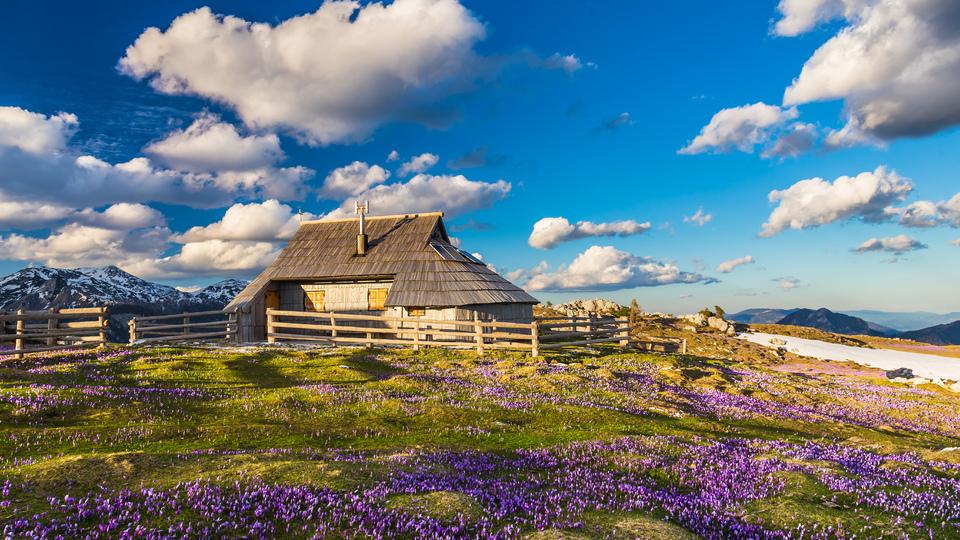
Velika Planina has open slopes with little natural shelter. Even moderate wind can make a cool day unpleasant, especially during a long photo stop. Strong gusts may also affect cable-car and chairlift operation. Check wind speed and the operator’s service notices; do not treat an advertised timetable as a guarantee of operation.
For the latest information, see the cable-car timetable.
Fog can be surprisingly disorienting on the plateau. Paths divide around huts and grassy rises, and the next landmark may disappear in cloud. Save an offline map, stay on marked paths and keep track of your return route. If visibility deteriorates, shorten the walk rather than trying to locate a viewpoint by intuition.
The surprising role of clouds and visibility
On some mornings the valley is cloudy while the plateau enjoys sunshine above a cloud layer. On others the opposite happens: a bright town gives way to dense mist higher up. Both situations are possible, and neither should be treated as a reliable forecast for the next few hours. If mist envelops the pastoral settlement, its broad tracks and gently rolling grassland can become difficult to distinguish. Carry a downloaded map, know where you started and resist the urge to follow an unfamiliar shortcut. The right response to deteriorating visibility may simply be to return by the route you already know. Scenic weather is enjoyable only when you can navigate safely.
In warmer months, afternoon convection may produce showers or thunderstorms. If instability is forecast, an early start and a shorter walking loop are usually more sensible than a late ascent. At the first signs of thunder, avoid exposed ridges and open high ground. No photograph is worth remaining in a dangerous position.
Snow, ice and transitional seasons
Late autumn, winter and early spring can bring snow or ice. Walking times published for summer may be misleading, while familiar tracks can disappear under fresh snow. Visitors without winter mountain experience should not improvise a demanding route. Choose a lower-altitude alternative when conditions exceed your skills.
Start checking conditions the evening before your visit, then repeat the process early on the day itself. Strong wind affects the comfort of a walk and may prevent the cable car or chairlift from operating. Thunderstorms require an early decision because open pastures offer limited protection. Snow and ice can change easy summer walking routes into serious winter terrain. Pack an extra warm layer, a waterproof shell, adequate water and footwear with good traction. If conditions exceed your experience, choose another destination. The Kamnik old town, cultural sights and lower valley offer an excellent alternative and can make a trip memorable for reasons entirely different from mountain views.

How to read the live webcam
The official webcam at Zeleni rob can provide a useful visual indication of clouds, visibility and ground cover. It is a snapshot of one location, not a weather forecast, and may not reveal ice, strong gusts or conditions farther away. Combine webcam images with ARSO forecasts and the cable-car operator’s notices.
The evening before, review the regional mountain outlook and the possibility of storms. In the morning, check wind, precipitation, live webcam and operational status again. Take a waterproof layer, an extra warm layer, water and shoes with good grip. Leave enough time to descend before darkness.
A memorable day on the plateau begins with a simple habit: respect the forecast, but keep watching the sky. Flexibility is not a compromise on a mountain day; it is often the reason the day works.
When you have only one day
International visitors sometimes plan their entire Slovenian itinerary around a single mountain afternoon. That can create pressure to go even when the forecast is poor. A better approach is to assign a weather alternative before the trip. If conditions on the plateau are unsettled, explore Kamnik’s medieval centre or the lower Kamniška Bistrica valley instead of improvising a risky hike. Conversely, if the morning forecast is favourable but storms are possible later, consider going up early and keeping the walk short. This approach gives you the pleasure of planning without treating the schedule as an obligation. A good mountain day is not measured by whether you reached every viewpoint, but by whether you could enjoy the landscape and return safely.
If the conditions are kind, the plateau rewards visitors with unusually wide horizons. If they change, the wiser choice may be a shorter walk or a different destination altogether. A good mountain day is not defined by how much ground you cover. It is defined by coming back with a clear head, a few strong memories and the quiet satisfaction of having treated the landscape seriously.